

Building a Corporate Wellness Program That Actually Works: Start With Onsite Childcare
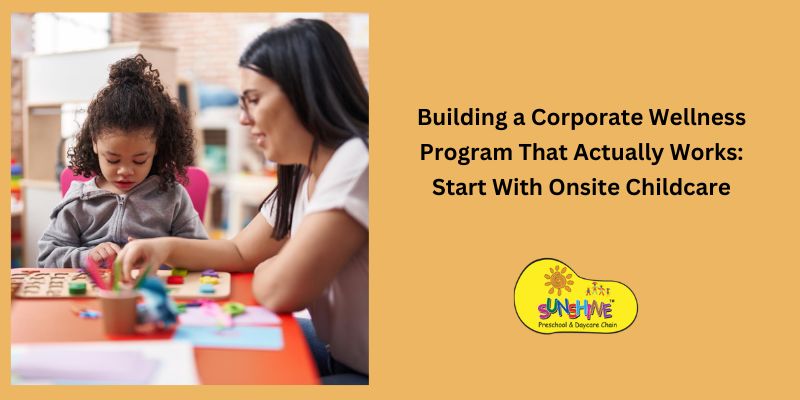
Corporate wellness programmes have become a familiar part of the modern workplace. Organisations invest in fitness initiatives, counselling platforms, health screenings, meditation sessions and wellness workshops, often with the intention of helping employees manage stress and maintain a healthier work-life balance.
But there is a question worth asking more often: Are corporate wellness programmes addressing the problems employees actually experience every day?
For working parents, one of those problems can be remarkably practical. Who will look after their child while they are at work? How far is the childcare centre from the office? What happens if a caregiver is unavailable at short notice? Can they return to work after maternity leave without constantly worrying about childcare arrangements?
These are not occasional concerns. For many parents, they are part of the everyday working experience.
This is where onsite childcare deserves a more prominent place in the wellness conversation. Unlike benefits that employees may use occasionally, a workplace crèche can address a recurring need throughout the working day. It can reduce logistical pressure, provide greater continuity of care and give working parents confidence that their children are safe and engaged while they work.
For organisations looking to build more meaningful corporate wellness programs, onsite childcare may therefore be one of the most practical places to begin.
Why Most Corporate Wellness Programs Fall Short
The challenge with corporate wellness is rarely a lack of good intentions. Most organisations genuinely want to support employee wellbeing and offer benefits that make the workplace healthier and more supportive.
The challenge is often relevance and utilisation.
A wellness application may provide access to meditation, exercise or sleep resources. An occasional workshop may offer useful advice on nutrition, stress management or financial wellbeing. These initiatives can certainly have value, but their impact depends on whether employees have the time and circumstances to use them.
For working parents, the underlying challenge may be much more immediate.
An employee who is spending part of the morning coordinating childcare, worrying about a child's safety or trying to arrange an unexpected pickup may not find that another optional wellness activity addresses the source of their stress.
This creates an important distinction between availability and everyday relevance.
A benefit can look impressive on paper without becoming part of an employee's daily experience. A stronger wellness strategy starts by identifying the practical barriers that most consistently affect employees, and then asking what the organisation can realistically do to reduce them.
Childcare is one such barrier.
Recent evidence highlights the scale of the issue. A 2025 UNDP synthesis on India's childcare economy found that women continue to shoulder a significantly greater share of unpaid domestic and caregiving work. According to the report's analysis of India's Time Use Survey 2024, 41% of women aged 15 to 59 participate in unpaid caregiving, compared with 21.4% of men, while women spend an average of 341 minutes a day on unpaid domestic and caregiving activities compared with 42 minutes for men.
That makes childcare worth considering as part of a broader wellness strategy rather than treating it as a completely separate HR benefit.
The Case for Starting With Onsite Childcare
The need for childcare is not marginal. It represents a substantial gap in India's care infrastructure.
A March 2026 UNDP and Dalberg report estimates that 6–7 million women from low-income urban households in India need quality, affordable childcare today, while existing public and private provision meets less than 10% of that demand. The report connects this childcare gap with women's workforce participation, child development and India's broader economic growth.
A separate June 2026 UNDP study, based on surveys of more than 200 parents and non-government childcare providers across seven Indian cities, identified trust, affordability and service delivery as three major barriers limiting access to childcare. The study also found that many parents recognise the benefits of childcare for child development and women's employment, while concerns about quality and safety continue to affect uptake.
For employers, this creates a clear opportunity.
An on-site crèche can bring childcare closer to where employees spend a significant part of their day while providing a professionally managed environment that addresses concerns about safety, quality, and reliability.
For working parents, this can translate into:
- Greater confidence that their child is being cared for during working hours
- Less dependence on multiple external childcare arrangements
- Reduced logistical pressure around daily drop-offs and pickups
- Greater continuity between work and childcare
- Greater support when transitioning back to work after maternity leave
The benefit is therefore not simply that an employee has somewhere to leave their child.
It is that one recurring source of uncertainty can be managed within the workplace ecosystem.
What an Onsite Crèche Actually Adds to a Wellness Programme
An on-site crèche changes the employee experience because childcare becomes part of the workplace rather than another logistical challenge employees have to solve during their working day.
Proximity
Location matters.
When childcare is available within the workplace, parents can avoid some of the additional travel associated with transporting children between home, daycare and the office. For employees with demanding schedules, reducing these additional journeys can make the workday more manageable.
Continuity of Care
An onsite facility can also provide greater continuity. Instead of coordinating between family members, domestic help, transport arrangements and external caregivers, employees have access to a structured childcare environment during working hours.
Peace of Mind
The value of reassurance is particularly important. Recent evidence from a UNDP childcare initiative in Delhi's Bawana industrial area illustrates the practical impact of accessible childcare. Within six months, the centre recorded average attendance of 85%, alongside improvements in child nutrition and visible gains in children's social and emotional development. Regular parent feedback was also used to shape the service.
A recent UNDP account of families using childcare services similarly highlights how dependable childcare can allow parents to work while ensuring their children are safe and cared for.
A Visible Signal of Employer Support
There is also a cultural dimension.
A workplace crèche demonstrates that an organisation has considered the practical realities faced by working parents. It makes employee support tangible rather than limiting it to policy documents or statements about work-life balance.
This is why onsite childcare can sit naturally within modern workplace wellness programmes. It addresses a real need, operates within employees' daily routines and creates a visible connection between organisational policy and employee experience.
The Business Case: What This Means for the Organisation
The case for workplace childcare is becoming increasingly visible within corporate India.
A January 2026 survey of 100 companies across IT, BFSI, FMCG, manufacturing and services, reported by The Economic Times, found that nearly 60% of companies had already budgeted higher spending on childcare and daycare facilities, approximately double the level reported three years earlier. The survey also found that childcare had emerged as one of the top HR support practices for working parents.
That shift is significant because it suggests organisations are beginning to view childcare as more than a statutory requirement.
For employers, a well-designed corporate crèche can support:
- Retention of working parents
- Employees returning to work after maternity leave
- Women's continued participation in the workforce
- Employee experience and engagement
- Family-friendly employer branding
- A more inclusive workplace culture
The regulatory context reinforces the importance of getting the operating model right. Employers covered by India's workplace childcare requirements need to consider not only whether a crèche facility is available, but also whether the arrangement is safe, accessible and appropriately managed.
Compliance should therefore be viewed as the baseline.
The stronger business question is whether an organisation can turn that requirement into an employee benefit that people genuinely value.
What to Look for When Evaluating an Onsite Crèche Partner
Not every childcare facility will deliver the same employee experience. For HR and workplace leaders, selecting an onsite crèche partner requires looking beyond whether a physical space and caregivers are available.
A prospective partner should be able to demonstrate:
Safety and hygiene: Clear child safety procedures, secure access, hygiene protocols, emergency processes and appropriately trained caregivers should be integral to daily operations.
Staffing and supervision: Staffing should reflect the ages and needs of the children using the facility, with clearly defined responsibilities and adequate supervision.
Age-appropriate learning: Children should experience more than basic supervision. Structured activities should support cognitive, social, emotional and physical development according to their age and stage.
Compliance readiness: Documentation, standard operating procedures, safety processes and records should be maintained systematically so the organisation can demonstrate responsible oversight.
Parent communication: Parents should have appropriate visibility into attendance, activities, learning progress, and key aspects of their child's day.
Operational consistency: Organisations with multiple offices or facilities need a partner capable of maintaining consistent standards across locations.
Commercial flexibility: Workforce size, location, shift patterns and utilisation can vary significantly. A childcare partner should be able to develop an appropriate operating model without compromising quality.
Recent UNDP research reinforces why these criteria matter. Its 2026 study identifies trust, affordability and service delivery as central barriers to childcare access.
For an employer, that means choosing a partner is not simply a procurement decision. It directly influences whether employees trust the childcare benefit enough to use it.
Technology can further strengthen this operating model. Digital systems can support attendance, documentation, parent communication, operational monitoring and reporting, giving HR teams greater visibility into a service that directly affects employee trust.
This is where Sunshine's corporate childcare approach brings together structured early learning, trained childcare professionals, technology-enabled operations, safety and compliance processes, and ongoing parent engagement.
The objective is not simply to place a crèche inside an office.
It is to make childcare a dependable part of the employee experience.
Building a Wellness Programme Around What Employees Actually Need
A successful wellness strategy does not necessarily need the longest list of benefits.
It needs benefits that respond to the realities employees face.
Fitness, mental well-being, health, and financial wellness initiatives can all play important roles. But organisations should also consider the practical circumstances that may prevent employees from fully engaging with work in the first place.
For working parents, childcare can be one such circumstance.
That is why onsite childcare should not be viewed as competing with other wellness initiatives. It can complement them by addressing a different dimension of wellbeing: the practical ability to manage work and family responsibilities.
The strongest corporate wellness programs are ultimately those that demonstrate that an organisation understands its workforce. For employees with young children, dependable childcare can be one of the clearest demonstrations of that understanding.
Conclusion: Start With What Employees Actually Need
Corporate wellness works best when it moves beyond a list of benefits and focuses on the problems employees actually experience.
For working parents, reliable childcare can influence their ability to concentrate, maintain consistent attendance, return to work with confidence and continue building their careers.
The growing evidence around India's childcare gap, combined with increasing corporate investment in daycare and crèche facilities, suggests that workplace childcare is becoming an increasingly important part of the employee experience.
That makes onsite childcare more than another workplace perk. It can become a practical component of employee wellbeing programs, particularly for organisations with a significant population of working parents.
The opportunity for employers is to view childcare not simply as a compliance or facilities decision, but as part of the wider employee experience.
Sunshine Preschool and Corporate Crèche helps organisations create safe, structured and professionally managed childcare environments that support children's development while giving working parents greater confidence during the workday.
For organisations looking to build a wellness strategy around what employees genuinely need, onsite childcare may be one of the most meaningful places to start.

Be the first to post a comment
Leave a Reply Cancel reply