

School Readiness Is More Than ABCs and Numbers: What Preschool Should Really Prepare Children For
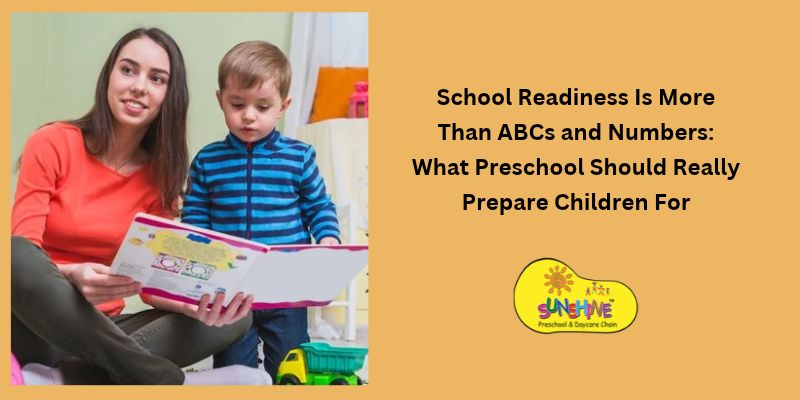
“Can my child read and write before starting primary school?” Parents often ask this question as they prepare their little ones for the next stage of education. Learning the alphabet, recognising numbers, and holding a pencil are useful milestones, but they don't tell the whole story.
School readiness also depends on whether a child can express their needs, follow instructions, interact with other children, manage everyday frustrations, and attempt simple tasks independently. These abilities help children participate in classroom activities and adjust to new routines.
India’s approach to early education reflects this broader understanding. In March 2026, the Ministry of Women and Child Development reiterated the importance of preschool education as part of the Foundational Stage, which includes three years of preschool followed by Classes 1 and 2. The aim is to support a smoother transition into formal schooling.
For parents, this means looking beyond worksheets and early academic milestones. The more useful question is whether a child is developing the skills, confidence and curiosity needed to learn.
What Is School Readiness, Really?
School readiness refers to the range of abilities that help children participate in learning, build relationships, and adapt to classroom expectations. It develops gradually through everyday experiences, play, conversations and age-appropriate learning opportunities.
The National Education Policy 2020 places early childhood education within a broader Foundational Stage. In a June 2026 article, PARAKH, the assessment unit under NCERT, explained how foundational learning should recognise children’s development beyond academic achievement. Play, stories, songs, activities, and meaningful interactions help young children learn and show their emerging abilities.
For preschoolers, school readiness involves five key areas:
- Communication: Expressing needs, asking questions and sharing ideas.
- Emotional regulation: Learning to manage frustration, cope with change and seek help when needed.
- Listening and following instructions: Paying attention to a teacher and understanding simple directions.
- Social interaction: Sharing, taking turns and learning to participate in a group.
- Independence: Attempting age-appropriate tasks such as eating, tidying up and managing personal belongings.
A child may recognise every letter of the alphabet but still need support with separation anxiety or taking turns. Another child may not yet write their name confidently but may be curious, communicative and comfortable participating in group activities.
Both children have strengths to build on. Readiness isn't a competition or a single test every child must pass at the same time.
The 5 Skills Preschool Should Build
1. Communication: Helping Children Express Themselves
Children need opportunities to express their thoughts, describe experiences, ask questions and communicate their needs. These skills help them interact with teachers, join discussions, and ask for help when something is unclear.
Communication develops through everyday conversations rather than memorising words alone. Listening to stories, describing pictures, singing songs and talking about familiar experiences give children opportunities to practise language in meaningful contexts.
Parents can encourage this development by asking open-ended questions such as, “What was your favourite part of the story?” or “What did you notice when we went to the park?” Allowing children time to respond is just as important as asking the questions.
The aim is not to make every child speak fluently or confidently in every situation. It is to help them gradually become more comfortable expressing themselves.
2. Emotional Regulation: Learning to Handle Big Feelings
Starting school can bring excitement and uncertainty. Children may have to manage separation from parents, unfamiliar surroundings, changes in routine, and moments when things don't go their way.
Emotional regulation means gradually learning to recognise feelings, communicate discomfort, and respond appropriately. It does not mean that a preschooler should never cry, feel frustrated or need reassurance.
Supportive adults can help by naming emotions, acknowledging how a child feels and modelling simple calming strategies. For example, a parent might say, “You seem upset because the game has ended. Let us take a few slow breaths before choosing what to do next.”
Predictable routines and gentle transition preparation can also help children feel more secure. With time and practice, they can begin to handle everyday challenges with greater confidence.
3. Listening and Following Instructions: Preparing for Classroom Routines
In a classroom, children often listen to a story, collect materials, follow a sequence of activities, or tidy up before moving on to something new. Being able to listen and respond to simple instructions helps them participate in these routines.
Parents can practise this skill through familiar activities. Ask your child to put their shoes away, pick up a book and bring it to you. You can also play games that involve listening carefully and responding to a cue.
Start with one simple instruction and gradually introduce two steps when your child is comfortable. Give them enough time to process what they have heard rather than repeating directions too quickly.
Attention spans vary with age, interest, tiredness and the environment. The goal is not prolonged stillness or perfect obedience. It is to help children develop listening habits and understand how to respond to instructions in different situations.
4. Social Interaction: Learning to Share and Cooperate
Preschool gives children opportunities to interact with others, encounter different perspectives, and learn how group activities work. Through play, they begin to understand concepts such as taking turns, sharing materials, respecting personal space and resolving small disagreements.
These abilities develop with experience. A child who struggles to share a favourite toy is not necessarily unprepared for school. They may simply need adult guidance and more opportunities to practise.
Parents can encourage social development through pretend play, cooperative games, visits with other children and shared activities with siblings or relatives. When disagreements arise, help children describe what happened and consider a fair solution instead of immediately resolving every conflict for them.
For children learning remotely, interaction opportunities also matter. Live group sessions can provide a setting to listen to others, respond to a teacher and participate alongside peers. These experiences can complement, but do not replace, the spontaneous social learning that happens through in-person play.
5. Independence: Building Confidence Through Small Tasks
Independence helps children participate more comfortably in the school day. Depending on their age and stage of development, they may learn to eat with less assistance, wash their hands, put away toys, manage their belongings, or communicate when they need help.
These tasks may seem small, but they give children opportunities to make choices, solve simple problems and recognise what they can do for themselves.
Parents can support independence by letting children try manageable tasks before stepping in. A child who struggles to put on their shoes may need guidance, not an adult completing the task immediately.
Consistency is helpful. Simple routines, like putting toys away after play or placing a water bottle in the same spot every day, can gradually build familiarity.
Children will not master every self-care skill at the same age. The priority is to encourage progress, offer support when needed and celebrate effort rather than expecting perfection.
Preschool Learning Activities That Build School Readiness at Home
School readiness does not require expensive learning materials or long practice sessions. You can incorporate many useful preschool learning activities into everyday routines. Keep them engaging, age-appropriate, and enjoyable.
Storytelling and Everyday Conversations
Read a short picture book together and invite your child to describe the characters, predict what might happen next or retell a favourite part. You can also ask them to tell you about their day.
These activities encourage vocabulary, listening, comprehension and self-expression. Let the conversation develop naturally, rather than turning every story into a test.
Emotion Cards and a Calm Corner
Use pictures of different facial expressions to help your child identify emotions such as happiness, sadness, anger and worry. Ask what might make someone feel that way.
A quiet corner with cushions, picture books or a favourite soft toy can provide a comfortable space to settle down when feelings become overwhelming. Introduce it as a supportive option, not a punishment.
Simple Board Games and Listening Games
Choose age-appropriate games that involve waiting, following simple rules and taking turns. You can also play games where your child responds to instructions, identifies sounds, or finds objects of a particular colour.
These activities build attention, listening, patience, and cooperation without relying on worksheets.
Pretend Play and Role Play
Set up a pretend shop, kitchen, clinic or classroom using everyday household items. Take turns playing different roles and encourage your child to ask questions, solve small problems and explain what is happening.
Pretend play creates opportunities to practise communication, imagination, social interaction and decision-making. It also allows children to explore familiar situations in a relaxed environment.
Small Tasks That Encourage Independence
Invite your child to put away toys, arrange books, help set the table or choose clothes from two suitable options. Break unfamiliar tasks into manageable steps and help as needed.
These everyday activities can build a sense of responsibility and give children practice with simple routines.
Pre-Writing Play: Preparing Little Hands for Writing
Writing readiness starts before children are expected to form letters on a page. Activities such as playing with dough, threading large beads under supervision, drawing lines, and tracing shapes can help children develop hand control and fine motor coordination.
Offer crayons, paper and other age-appropriate materials without insisting on perfect shapes or letter formation. The aim is to build familiarity, coordination and confidence through enjoyable practice.
The wider principle is simple: children learn by actively engaging with the world around them. TheNCERT National Curriculum Framework for the Foundational Stage describes play, conversation, stories, music, movement, art and games as important elements of early learning. These experiences can help make learning meaningful rather than focused only on memorisation.
What to Look for in a Preschool That Builds School Readiness
When choosing a preschool, parents should look beyond the number of worksheets completed or letters recognised. Consider whether the learning environment supports a child's overall development.
Use this checklist when evaluating a programme:
- A play-based approach: Children get opportunities to explore, create, ask questions and learn through activities.
- Trained teachers: Educators understand young children's developmental needs and respond with patience and encouragement.
- Opportunities for interaction: Children have appropriate opportunities to communicate, cooperate and participate with peers.
- Predictable routines: The day includes a balanced mix of learning, movement, play and rest where appropriate.
- Age-appropriate expectations: Activities match children's developmental stages instead of placing unnecessary pressure on them to perform.
- Communication with parents: Families receive useful information about learning progress, strengths and areas where additional support may help.
Be cautious of programmes that rely heavily on worksheets, rote memorisation, and early academic performance while paying little attention to play, communication, movement, and social development.
Parents may also need flexibility in how their children access early education. For families who live far from a preschool centre, travel frequently, or have children stay with grandparents, a structured online programme can offer another route to guided learning.
How Corporate Crèches Can Support School Readiness
A corporate crèche can offer more than childcare for working parents. When combined with structured, age-appropriate preschool learning, it can give children opportunities to develop skills that support their transition to primary school.
Through guided activities, storytelling, creative play and interaction with other children, a well-planned crèche environment can encourage communication, cooperation, independence and curiosity. Familiar routines also help children become comfortable with group activities and following simple instructions.
By bringing early learning into everyday childcare, corporate crèches can create a nurturing environment where children learn through play while developing foundational skills at their own pace. This approach also lets working parents access childcare that supports their child's early development alongside their professional commitments.
Prepare Children for Learning, Not Just Lessons
School readiness is about helping children feel capable of learning, communicating and participating in new experiences. Communication, emotional regulation, listening, social interaction and independence all deserve attention alongside early literacy and numeracy.
Parents can nurture these abilities through simple activities and everyday routines, while a suitable preschool programme can provide additional structure and guidance.
The goal is not to make every child reach the same milestones at the same time. It is to give each child opportunities to learn, grow and approach the next stage of education with greater confidence.
How Our Daily Learning Programme Supports School Readiness
We understand that every family's preschool journey is different. Our Daily Learning Programme (DLP) brings live, interactive and play-based learning to children at home, making structured preschool education accessible to families who may not have a Sunshine centre nearby or live outside India.
Through ourDLP, we offer learning for Playgroup, Nursery, LKG and UKG, covering key areas that support school readiness:
- Stories and language: Building vocabulary, listening and early literacy through storytelling and language activities.
- Early maths and thinking: Exploring numbers, patterns and problem-solving through age-appropriate activities.
- Art, music and creativity: Encouraging creative expression and fine motor development.
- Social skills and confidence: Giving children opportunities to participate in live, interactive group sessions.
- Values and life skills: Introducing kindness, independence and positive everyday habits.
We combine structured learning with teacher guidance to make early education engaging and interactive. We also encourage parents to complement DLP sessions with outdoor play, physical activities and everyday social interactions, helping children develop a broader range of skills as they prepare for primary school.
Ready to support your child's early learning journey? Explore ourDistance Learning Programme to discover the daily learning options available for your child.
FAQs
At what age should a child start preschool?
The appropriate age depends on the child's developmental needs, family circumstances and the programme's entry requirements. In India, the Foundational Stage under NEP 2020 includes three years of preschool followed by Classes 1 and 2. Parents should check the age criteria of their chosen school.
How do I know if my child is ready for primary school?
Look for developing abilities in communication, emotional regulation, listening, social interaction and independence. Children do not need to master every skill before starting school. Teachers and parents can work together to identify areas where additional support may help.
Should my preschooler be able to write before Class 1?
Not necessarily. Early mark-making, drawing and fine motor activities can help prepare children for writing. Formal letter formation develops gradually, and expectations should match the child's age and developmental stage.
How can I support school readiness at home?
Read together, talk about everyday experiences, play simple games, encourage pretend play and involve your child in small household tasks. Consistent routines and opportunities to practise independence can also help.

Be the first to post a comment
Leave a Reply Cancel reply